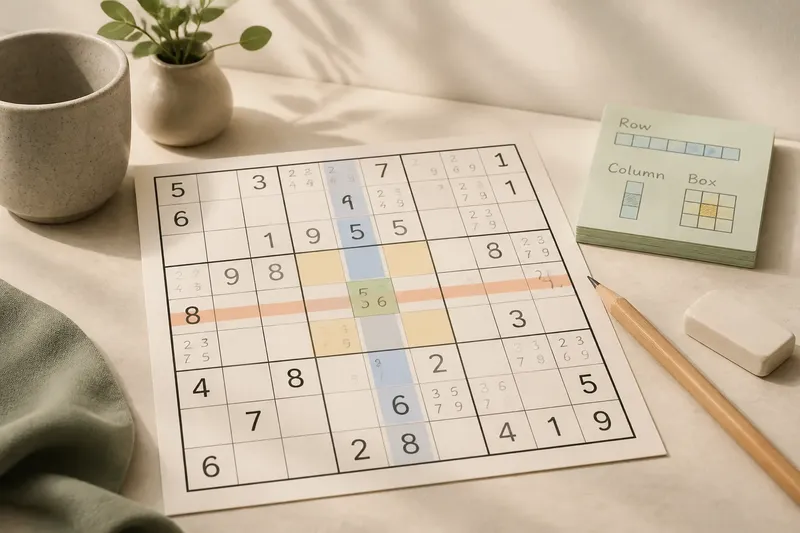
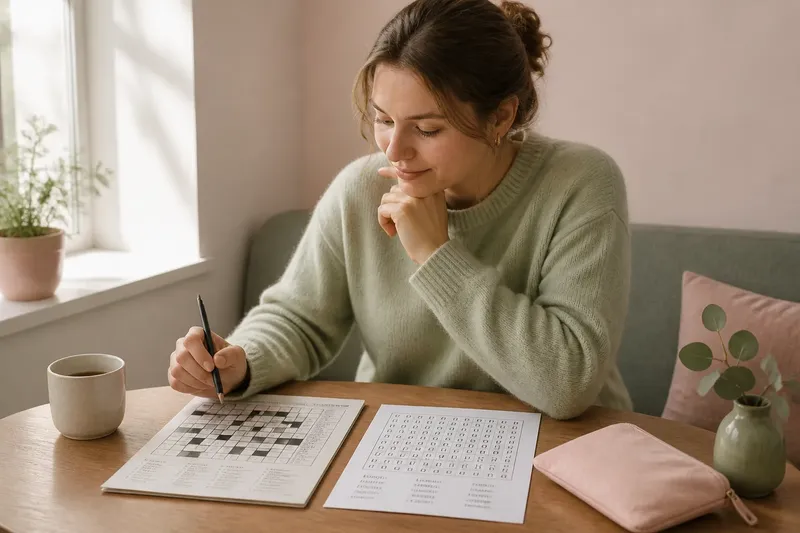
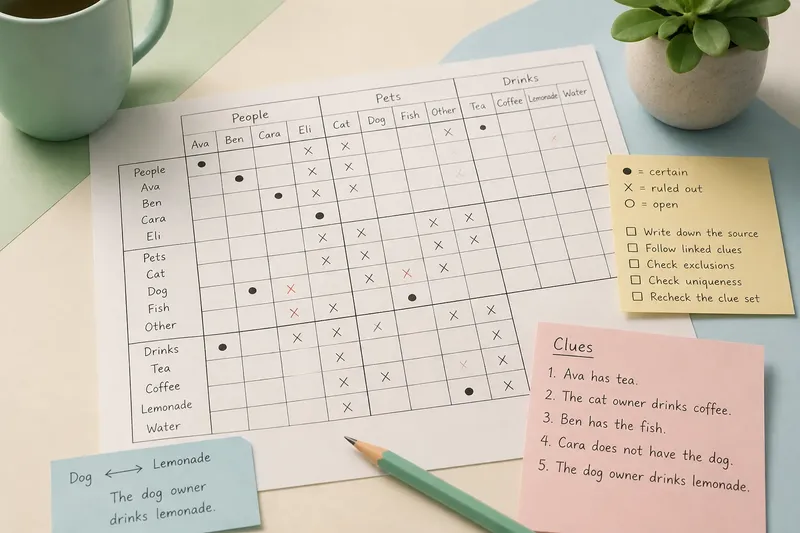
From Newspaper Pastime to Pocket Puzzle
Compare newspaper, booklet, and phone puzzles to see how each format shapes access, attention, and shared solving, then choose one that fits your routine.
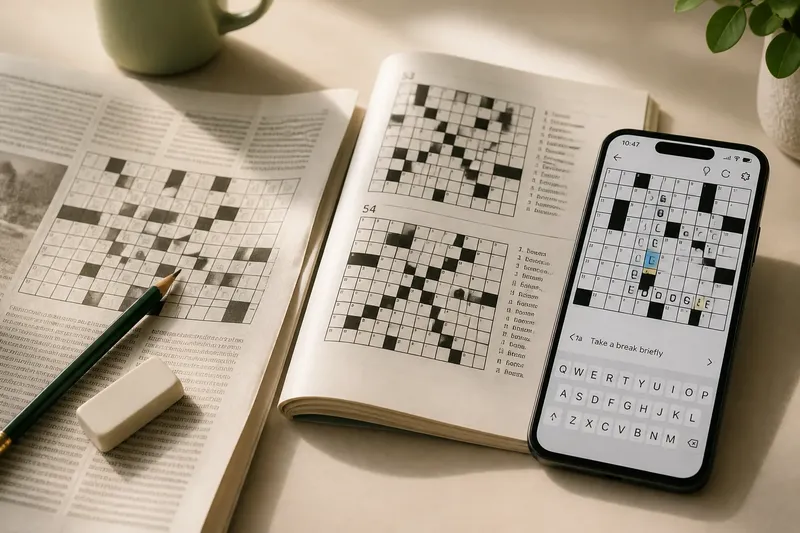
The common mistake in tracing the newspaper pastime to the pocket puzzle is treating portability as a simple change of container. A newspaper page, a bound puzzle booklet, and a puzzle on a phone can use similar rules, yet each format offers a different way to find, handle, and revisit a game. Comparing those formats is more useful than telling a story of one replacing another.
How does a newspaper page shape puzzle solving?
A newspaper places a puzzle within a larger reading session. The solver can encounter it while reading other material and start with the page, a pencil, and perhaps an eraser. The puzzle is not a separate object to pack, though keeping it may mean saving or folding the page.
A printed grid stays in one place and can show clues, marks, and crossings together. A solver can set the paper aside and return to the same visible work. The page can also be shared: two people can point to a clue or discuss an answer while looking at the same grid. These are possibilities created by the page’s fixed, shared surface, not rules of the puzzle itself.
This format fits someone who likes incidental discovery or wants to spread a puzzle out on a table. It is less convenient if the solver wants to carry one game without the rest of the paper or keep several unfinished puzzles organized.
What does a puzzle booklet make easier?
A booklet gathers puzzles in one place, separating them from the newspaper or other reading material where a solver first encountered them. Its pages can keep unfinished work together, and a solver can mark a place and return later without saving a loose clipping.
The tradeoff is that a booklet still needs space. It must be carried, opened, and held or placed somewhere. Its pages may be less comfortable to use in a crowded seat than a screen, while its physical surface may be easier to share than a personal device. Those differences depend on the booklet’s layout and the place where someone is solving.
A booklet suits a solver who wants a collected supply and a lasting paper record. A newspaper page favors discovery during reading; a booklet favors keeping several puzzles together.
What changes when a puzzle moves to a phone?
A phone makes a puzzle available without a pencil or tabletop. Depending on the game, it may save progress, let the solver undo an entry, or offer a way to check an answer. These tools can make it easier to resume or experiment, but they change how a solver records work.
The screen also brings its own limits. A notification can interrupt a session, a fingertip may cover a small cell, and a large board may not fit in view at once. Some games let players enlarge text or move around the board; others offer fewer adjustments. A solver who prefers to see a whole grid or write notes directly on paper may find print more comfortable.
A phone suits someone who values quick access and saved progress. It may be a poor fit for a solver who wants a broad view, fewer distractions, or the tactile habit of pencil marks.
Which puzzle format fits your routine?
Choose by the way you want to encounter and handle a puzzle, rather than assuming the newest format is always the most convenient.
- Check whether you want incidental discovery: If you enjoy finding a puzzle while reading, choose a newspaper page; if you want puzzles gathered in one place, choose a booklet.
- Check how you resume unfinished work: If you want a visible paper mark, use a page or booklet; if you want progress saved in the game, choose a phone puzzle that offers that feature.
- Check how much of the grid you need to see: If you prefer the full layout in view, choose a printed page that provides enough room; if a smaller display is comfortable, a phone may suit you.
- Check whether you solve with another person: If you want to point to clues on a shared surface, choose print; if you solve separately, a personal phone or booklet may be easier to manage.
- Check what tools you want: If you rely on pencil notes and an eraser, choose print; if undo or saved progress matters more, look for those options in a phone game.
- Check where you usually solve: If you have a table or a steady seat, a newspaper or booklet can work well; if you need to keep a puzzle close during brief pauses, a phone may be more convenient.
Say you have a few quiet minutes while waiting for a ride, often fold away a paper before finishing, and want to resume the same board later. You choose a phone puzzle whose game visibly saves progress, open it during the wait, and leave it when the ride arrives. When you return, the saved board lets you continue without finding the newspaper page; the tradeoff is a smaller screen and possible interruptions. If you instead want to discuss clues with someone beside you, a booklet or newspaper page gives both of you a shared surface.
What do people ask about newspaper and phone puzzles?
Are newspaper puzzles different from online puzzles?
The rules may be the same, but the format changes how the puzzle is displayed and handled. Print provides a fixed page, while a phone game may save progress or offer digital input tools.
Why do some solvers prefer pencil and paper?
Paper lets a solver make notes beside the grid and view the page without switching screens. It also gives people solving together a surface they can both see.
Does a phone make puzzles easier?
A phone can make it easier to start or resume a game if it offers saved progress or convenient controls. A small display or interruptions may make the same puzzle less comfortable for some solvers.
Can the same puzzle work in print and on a screen?
Its rules can remain unchanged, but the layout, controls, and available tools affect the solving experience. The screen version may need different ways to enter answers or move around the board.
What is not worth the effort?
It is not worth searching for one format that suits every place and mood. Keeping several puzzle sources ready for every possibility can add sorting without making solving more enjoyable. Start with the format that fits your usual routine, and add another only when it serves a different setting.
The shift from newspaper pastime to pocket puzzle is best understood as a comparison of access and attention, not a contest in which one format must replace the others. A page offers a fixed shared surface, a booklet keeps a collection together, and a phone can make a game available during a pause. To choose a format, notice where you solve, whether you share the work, and how much of the board you want in view.
For the search phrase “newspaper pastime to pocket puzzle,” the practical distinction is the format’s fit with your routine. Keep a paper puzzle near the place where you read if you like a visible page; use a phone for waits when saved progress matters. The right choice is the one that makes it easy to return to the puzzle on your own terms.